
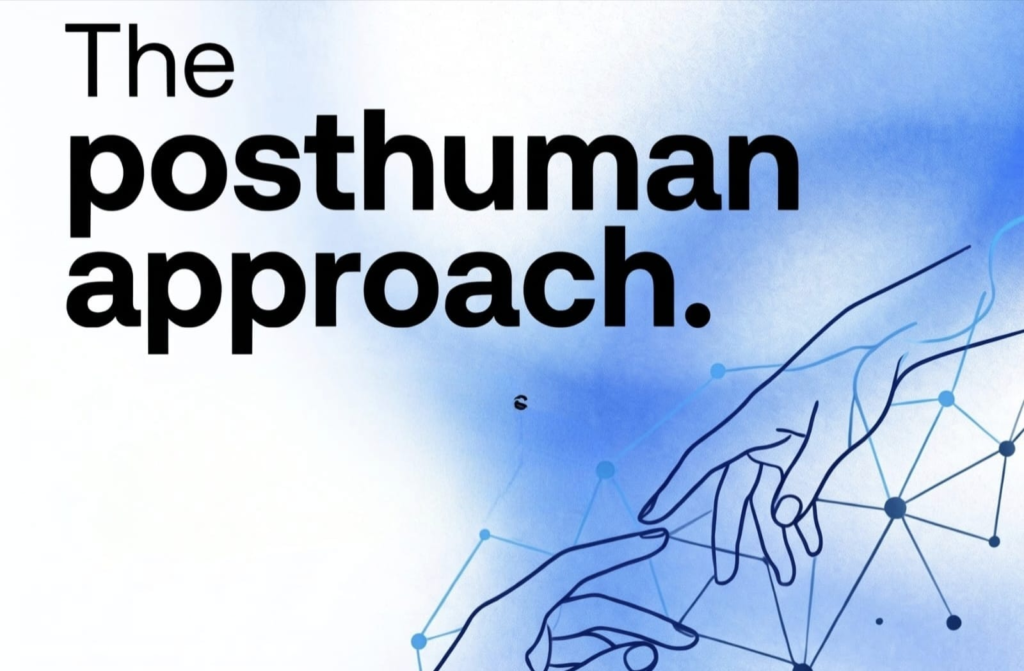
In traditional product design, we usually treat technology as just a simple tool waiting for a user to press a button. However, the posthuman approach changes this view by seeing humans and technology not as separate things, but as one connected system that grows together (Haraway, 1991; Hayles, 1999; Braidotti, 2013). Rooted in cybernetics and network theory (Wiener, 1948; Latour, 2005), this idea moves designers away from just making pretty screens (beyond the interface) to understanding how technology naturally becomes part of our daily lives.
To understand how people truly adopt and live with technology, this approach looks at three main areas. First is Embodiment, where a device feels like a natural extension of our body and senses, changing our daily habits (Hayles, 1999). Second is Shared Agency, which means humans and smart systems make decisions together through a constant feedback loop (Latour, 2005; Wiener, 1948). Third is Assemblage, showing that we never use a product alone—it always connects with our physical spaces, routines, and other devices (Braidotti, 2013; Latour, 2005).
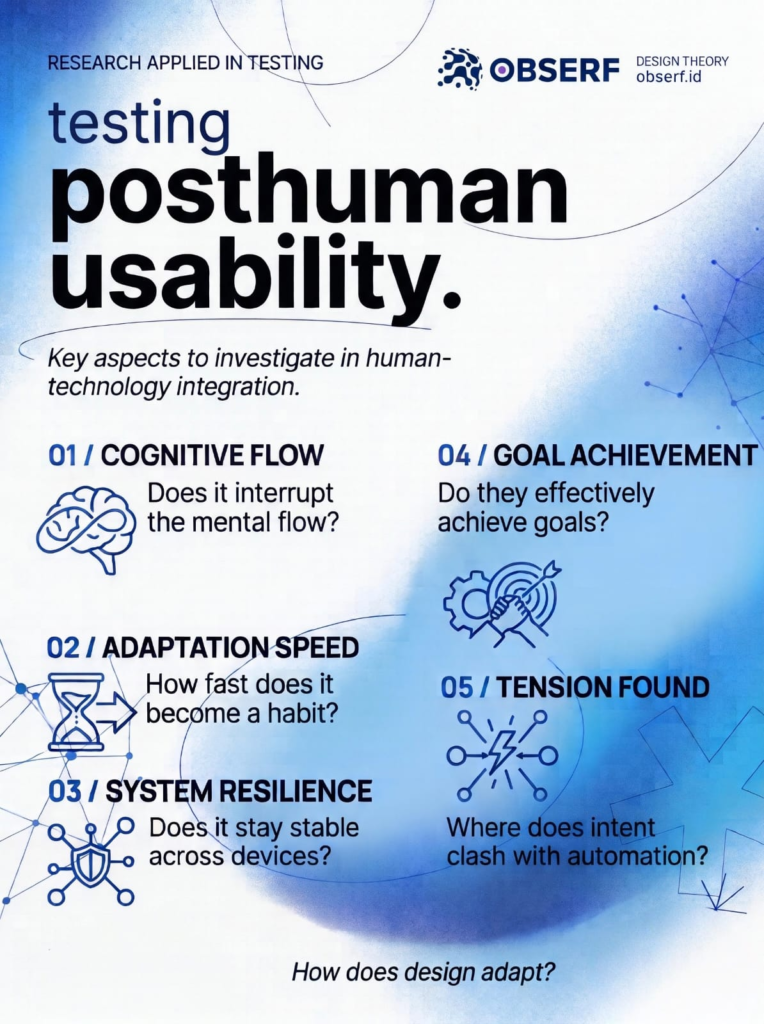
This new way of thinking changes how we do usability testing for tech products. Researchers can no longer just count clicks or check how fast someone finds a menu button. Instead, testing needs to look at how smoothly humans and technology work together, starting with Cognitive Flow (does the product feel natural, or does it interrupt the user’s focus?) and Adaptation Speed (how fast does using the product become an automatic habit?).
Posthuman usability testing also means checking how well a product works in the real world. Researchers need to test System Resilience to make sure the product stays reliable across different devices, changing situations, and everyday disruptions. At the same time, checking Goal Achievement helps teams see if the human-tech partnership actually helps users reach their goals, rather than making them overly dependent on the system.
Finally, the most important part of this testing is spotting Tension Found—the moments where what the user wants clashes with what the automated system or AI decides to do. By finding these friction points early during testing, design teams can build technology that is not only smart, but also adapts smoothly as a natural extension of human ability.